

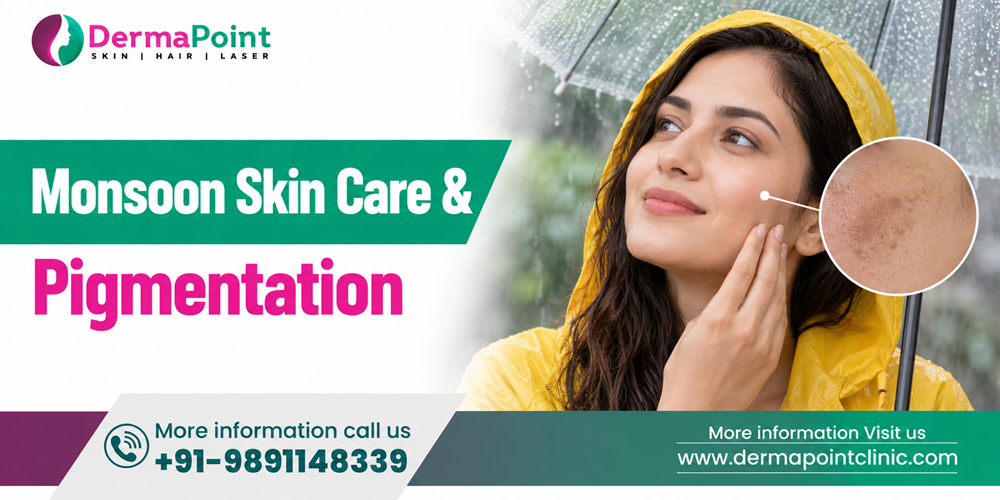
The monsoon is a welcome relief from heat; however, the increased humidity and sweating, as well as pollution and regular weather changes, could cause skin problems. For those with skin that is prone to pigmentation, the rainy season can cause problems including dark spots or uneven skin tone, acne marks and Melasma.
Implementing a good Monsoon Skin Care for Pigmentation routine will help maintain healthy skin and decrease factors that could cause more pigmentation. But persistent pigmentation usually requires a professional assessment because the causes can range from acne and sun exposure to hormonal changes and melasma.
As per Dr. Shuchi Singla, dermatologist at Dermapoint Clinic, Gurgaon, it is important to treat pigmentation according to the type of skin and the root cause, rather than relying solely on one particular treatment or product for skincare.
Why Does Pigmentation Become a Concern During Monsoon?
Monsoon’s humid conditions can cause sweating to increase and cause the skin to appear oily. Excess sebum, sweat as well as dirt and pollution can build up on the skin, leading to acne and blocked pores.
If skin inflammation or acne heals, it may leave dark marks that are referred to as post-inflammatory pigmentation. In the same way, the effects of UV exposure do not disappear completely during rainy or cloudy days. Continued exposure to sunlight can lead to the process of getting darker and can make dark spots appear more prominent.
So, the skincare routine should be uniform throughout the monsoon season.
Follow a Simple Monsoon Skincare Routine
An effective monsoon skincare routine for pigmentation doesn’t have to include a lot of products. A simple routine that consists of cleansing, moisturizing, and sun protection could provide an excellent foundation to maintain healthy and beautiful skin.
Apply a gentle cleanser to get rid of sweat, oil and impurities without overly drying your skin. When you’re done cleansing your skin, put on a light moisturizing cream that’s appropriate for your skin type.
Patients with acne-prone or oily skin types may want to use light products that are not comedogenic, while those with sensitive or dry skin require products that will provide extra water retention.
Do not introduce multiple new active ingredients at the same time because it can cause pigmentation issues to become more difficult to control.
Do Not Skip Sunscreen During Monsoon
A single of the crucial Dermatologist guidelines for the treatment of pigmentation is to ensure that you are getting sun protection on a daily basis.
The cloudy weather may give the illusion that sun protection isn’t needed. But exposure to UV is still possible in the monsoon. For skin that is prone to pigmentation, regular application of a broad-spectrum sunscreen is a vital element to prevent further darkening.
Apply sunscreen in accordance with the instructions on the label and apply it again whenever necessary, particularly when you are outside or sweating. You may also be exposed to the elements.
Utilizing your umbrella, cap, or any other form of protection may offer additional protection during prolonged periods outdoors.
Keep Acne Under Control
Acne and pigmentation are often seen in conjunction. Pimples can leave dark marks when they heal, particularly if they are frequently targeted, picked, or squeezed.
The moist monsoon climate can result in an increase in oiliness and breakouts among certain people. Maintaining clean skin by avoiding unnecessary touch and using the correct skincare products can support clearer skin.
If the acne persists or is often accompanied by dark marks, visiting a dermatologist may aid in preventing recurring skin pigmentation.
Choose Products According to Your Skin Type
There isn’t a universal skincare routine that is suitable for all types of pigmentation. Dry, oily, sensitive and acne-prone skin may require different treatments.
The same way, pigmentation triggered by acne could require a different treatment approach than sun-induced or melasma-related pigmentation.
This is the reason why a professional evaluation is beneficial if the pigmentation persists or is seen to return.
Doctor. Shuchi Singla, dermatologist at Dermapoint Clinic, Gurgaon, offers dermatological treatment for a variety of skin conditions, including Melasma and pigmentation. Depending on the person’s health, the treatment options offered by a professional could be considered as part of a customized treatment plan.
Pigmentation Treatment in Monsoon
A simple skincare routine can promote healthier skin; however, persistent pigmentation might require professional help. The correct treatment will depend on the severity, type and cause.
Pigmentation treatment in monsoon may include dermatologist-recommended topical treatments or procedures such as chemical peels and laser-based treatments when considered suitable for the patient.
Dermapoint Clinic provides treatments for melasma, pigmentation and cosmetic dermatology treatments. However, procedures such as laser treatments or chemical peels must be performed only following the appropriate assessment by a professional.
The objective should not just be to appear less blotchy. The primary goal should be finding the root of the problem and restoring the health of your skin.
When Should You Consult a Dermatologist?
Consider consulting a dermatologist if:
- The pigmentation continues to get worse even with regular skin care.
- Dark spots are always returning.
- Acne frequently causes the appearance of pigmentation.
- The patches are persistent on your face.
- You suspect melasma.
- Skincare products can cause irritation or burning.
- You may be thinking about laser or chemical peels.
A dermatologist can assess the skin and suggest the best treatment program based on the root causes.
Conclusion
Healthy skin in the monsoon is a matter of consistency, not unnecessarily complex routines. Gentle cleansing, proper moisturisation, regular sun protection, as well as acne control and staying clear of harsh scrubbing, will assist in maintaining smooth and healthy-looking skin.
For those who suffer from permanent pigmentation, the home remedy might not be sufficient. Different kinds of pigmentation may have different causes and require different treatment strategies.
Adopting the appropriate Monsoon skin care techniques and seeking guidance from a professional as needed can help reduce the appearance of pigmentation. If you’re concerned about dark spots or uneven skin tone, Melasma, or frequent pigmentation, speak with a doctor. Shuchi Singla at Dermapoint Clinic, Gurgaon, can help you gain a better understanding of your skin and help you explore treatment options that are individualized to your needs.
The aim of treatment for pigmentation isn’t just to have more attractive skin; it is healthier skin through a safe, appropriate and personalized method of treatment.
FAQ
1. Are monsoon-related weather patterns causing more pigmentation?
Monsoon humidity can trigger sweating and oiliness as well as breakouts for some individuals. Acne and inflammation can cause post-inflammatory pigmentation. Continued exposure to UV rays can alter the existing pigmentation.
2. Does sunscreen need to be applied during monsoon?
Yes. Rainy or cloudy weather does not mean the sun’s rays are not present. A daily dose of sunscreen is an essential component of protecting skin that is prone to pigmentation.
3. What is the ideal routine of skin care for the monsoon season’s blotches?
A typical routine could include gentle cleansing, an appropriate moisturiser and a daily broad-spectrum sunblock. The other products you use should be selected depending on the type of skin and colouration issue.
4. Does acne cause a rash of pigmentation?
Yes. Acne marks can be dark as the inflammation subsides. The act of rubbing or squeezing pimples may make it more likely for marks to appear and prolong inflammation.
5. Do I need to use scrubs to remove the pigmentation?
Scrubbing vigorously is not advised for skin with a tendency to pigment. Abrasions from excessive friction can irritate and make the pigmentation more obvious.